
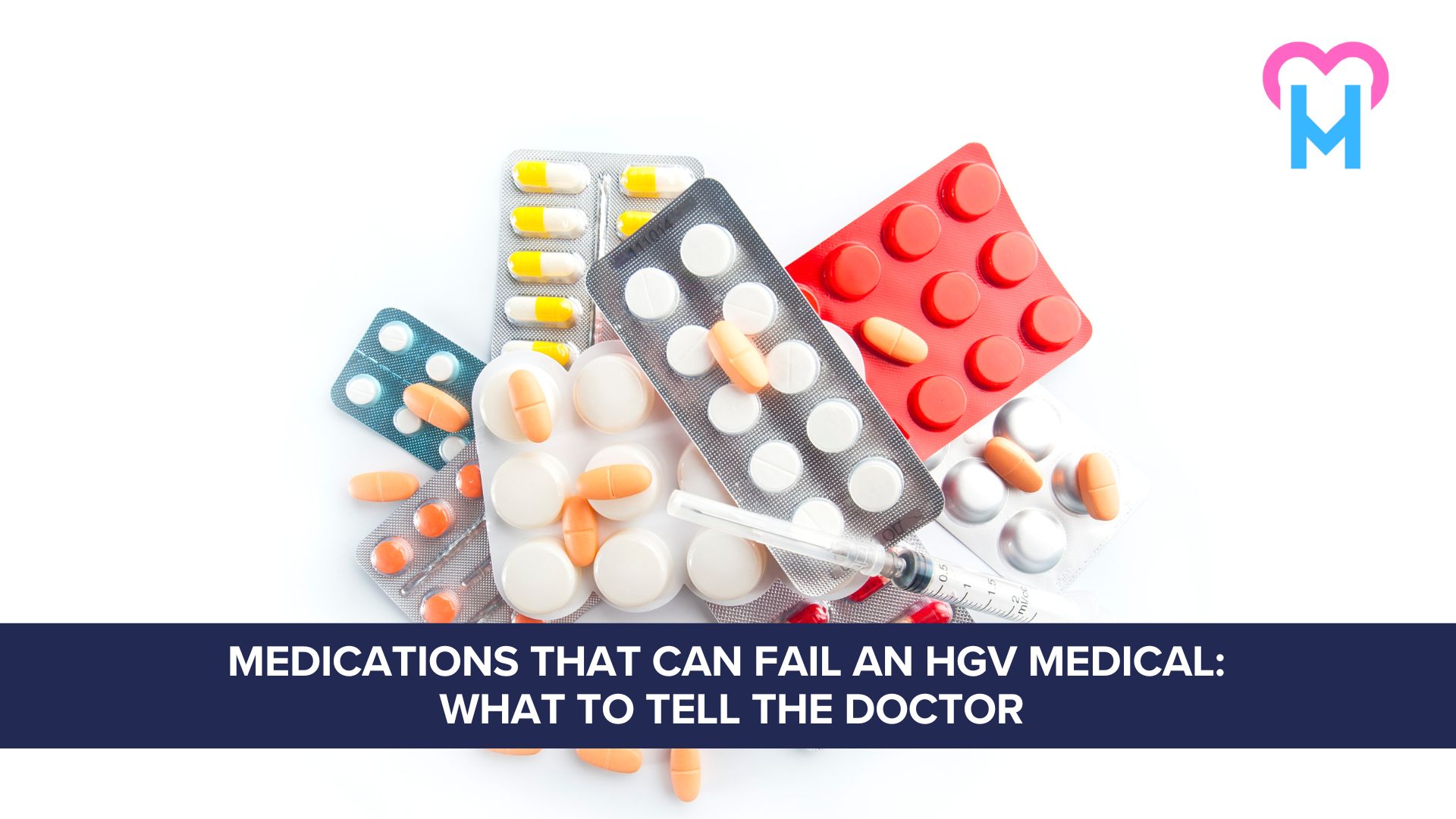
Medications can affect driving more than most people realise, especially for professional drivers who must meet strict Group 2 medical standards. Some prescriptions slow reaction times, cause drowsiness, or blur vision, any of which can put safety and licenses at risk. Being open with your doctor ensures you stay compliant with DVLA rules and get proper guidance. Most medicines don’t lead to automatic failure if managed responsibly. Knowing what to share and how to prepare is the key to a stress-free medical.
Which medications are most likely to cause problems during an HGV medical?
The main issues come from drugs that affect the brain, coordination, or alertness. Sedatives, strong painkillers, anti-anxiety medication, and certain sleep aids can all reduce reaction speed. Some antihistamines, antidepressants, and anti-seizure drugs have similar side effects. Even over-the-counter tablets marked “may cause drowsiness” should be taken seriously. Recognising these risks helps you explain them clearly during your examination.
Do painkillers or sedatives automatically mean a fail?
No, not automatically. Doctors assess how your body reacts to medication, the dose, and how often you take it. Many drivers continue safely on long-term prescriptions once stability and safety are shown. The concern arises if symptoms such as drowsiness or confusion persist. Keeping a steady routine and explaining side effects helps the examiner make a fair decision.
Can antidepressants, anti-anxiety, or sleep aids affect the result?
Yes, they can, but context is everything. Modern antidepressants and anxiety medications often have fewer side effects than older types. However, early stages of treatment or sudden dose changes can briefly affect alertness. If you feel dizzy, tired, or less focused, it’s best to delay driving and tell the doctor at your appointment. That discussion builds trust and avoids surprises later on.
What about common allergy or cold medicines?
Many allergy tablets, particularly first-generation antihistamines, can cause sleepiness. Some cold remedies also contain sedatives or alcohol, which can worsen reaction time. Always check labels for drowsiness warnings before taking them during working hours. Non-drowsy versions are widely available and often acceptable for professional drivers. If unsure, mention them on the medical form so the doctor can note safe alternatives.
Do blood pressure or diabetes medicines affect your HGV medical?
Some medicines for high blood pressure, diabetes, or heart conditions may impact driving temporarily, especially if they cause dizziness or fatigue. However, these are rarely disqualifying if the condition is well managed. Doctors mainly check that your levels are stable and monitored. Keeping records from your GP or specialist makes the review straightforward. Once these are clear, your focus should turn to communication.
What should you tell your doctor about your prescriptions?
Be honest about all prescribed, over-the-counter, and herbal medicines you take. List the name, dose, and how long you’ve been using each one. Mention any changes or side effects that have affected alertness or focus. Bring medication packaging or a repeat prescription slip for reference. Transparency helps the doctor complete your D4 accurately and can prevent future licence issues.
How can you prepare for your HGV medical if you take regular medication?
Start by reviewing your prescriptions with your GP a few weeks before your appointment. Make sure no recent dose changes or side effects remain unresolved. Rest well before the exam and avoid skipping or doubling doses. Bring photo ID, your D4 form, and a written list of all current medicines. Preparedness keeps the process quick and stress-free.
What happens if a medication causes concern during the exam?
If a medicine raises concern, the doctor may request additional information from your GP or suggest a short break to reassess your response. In some cases, a note confirming stability or specialist oversight is enough. The goal is not to fail drivers but to ensure safety and compliance. Honest communication speeds up this process. Once clear, most drivers return to work without delay.
When should you inform the DVLA about medication use?
You must inform the DVLA if you start medication that could impair driving or if your doctor advises it. Conditions like epilepsy, diabetes on insulin and the group 2 medical, or sleep disorders require formal notification. Reporting early prevents future complications with licence renewals. Keep written records of every update or conversation. Clear reporting shows professionalism and protects your driving status.
Can HGV Medical help with questions about medication and fitness to drive?
HGV Medical provides structured assessments that review how medications may affect driving safety and DVLA compliance. The team checks your eyesight, reaction time, and blood pressure while noting any medicines that need follow-up. Advice is clear, practical, and focused on keeping you fit for work. You’ll receive guidance on what to discuss with your GP if concerns arise. With the right preparation, your medical becomes routine and stress-free.
A Safe, Straightforward Way To Stay Licensed
Being open about medication is not a risk, it’s part of staying safe and compliant. Most prescriptions are fine when taken correctly and reviewed regularly. Honest reporting, stable treatment, and simple preparation help drivers meet DVLA standards with confidence. A few proactive checks make every HGV medical smoother. Staying informed keeps you safe on the road and licensed for years to come.