
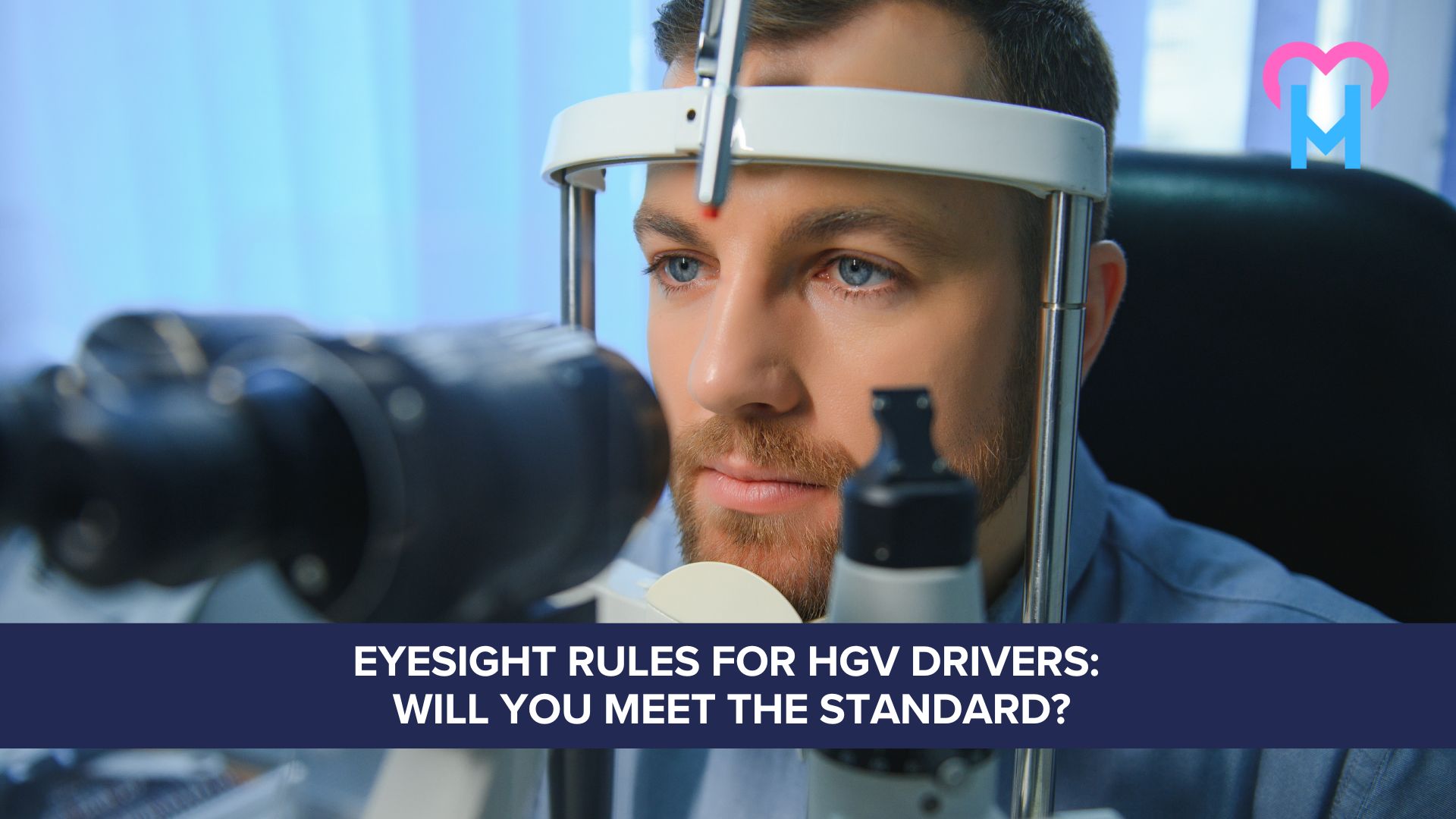
Good eyesight is one of the most important tools for any HGV driver. Every mirror check, road sign, and turn relies on sharp vision and full awareness of what’s happening around the cab. The DVLA sets strict eyesight standards because even small vision changes can affect reaction times and judgment. Regular checks help catch problems early and keep drivers safe and compliant. With that in mind, it’s worth knowing exactly what the current eyesight rules for HGV and PCV drivers really mean.
What eyesight standard must HGV/PCV (Group 2) drivers meet?
The standard requires each eye to reach a set level of visual acuity and both eyes together to meet the Group 2 target. Reading a number plate at the legal distance is not enough, because professional driving needs a higher benchmark. Vision with or without correction must be stable and comfortable for long shifts. Colour vision is not usually required, but any serious defect must be assessed. With the rule in mind, it helps to know how it is measured on the day.
How are visual acuity and field of vision assessed on test day?
Visual acuity is assessed using a chart or digital device while you cover each eye and then both eyes together. Results are recorded with your usual correction if you wear glasses or contact lenses. The field of vision is checked to make sure side awareness meets Group 2 limits. The examiner looks for reliable, repeatable responses rather than guesses. Once the method is clear, you can see how each eye is judged.
Do both eyes need to meet the standard, or can one be weaker?
Both eyes must meet defined levels, but a mild difference between eyes can be acceptable if combined vision meets the Group 2 threshold. The focus is on safe binocular vision and a full visual field. If one eye is much weaker, more checks may be needed to confirm safe function. Good correction with lenses often solves borderline cases. With acuity covered, the next point is colour vision.
Is colour vision required for HGV driving?
Colour vision is not routinely required for a Group 2 licence, although severe defects can still raise safety questions. Road signs and signals rely more on position and brightness than fine colour shades. If work tasks demand accurate colour recognition, an employer may ask for extra checks. Mild colour weakness rarely prevents safe HGV driving. With that clarified, many drivers ask about visual aids.
Can I pass using visual aids, such as glasses, contacts, varifocals, tints, or prescription sunglasses?
You can pass using visual aids if your corrected vision meets the standard and lenses are suitable for driving. Glasses should fit well and give a stable view without heavy distortion. Varifocals are allowed, though some drivers prefer single-vision distance lenses for night work. Tints and prescription sunglasses are fine in daylight if they do not reduce contrast too much. With general aids covered, special cases need attention.
What are the rules on mono-vision lenses and laser eye surgery recovery?
Mono-vision contact lenses can affect depth perception, so they are assessed with care for Group 2 work. If used, you must show good distance clarity and comfortable binocular vision. After laser eye surgery, you should wait for stable vision and bring a recent report before testing. Dry eye and glare should be settled before long shifts. If surgery is not planned, eye health still matters.
What if I have eye conditions such as cataract, glaucoma, macular disease, or diabetic retinopathy?
You can often pass with treated cataract, controlled glaucoma, or mild macular changes if the standard is met. Regular reviews and up-to-date letters help show stable control. Diabetic eye disease must be monitored closely to protect night and glare performance. The key point is whether corrected vision and fields remain inside Group 2 limits. When symptoms vary, prompt reporting keeps you safe and legal.
Do symptoms like double vision, severe glare, or frequent migraine aura need reporting?
Yes, double vision, severe glare, or repeated migraine aura should be reported because they can affect safe driving. Temporary issues may need short breaks until vision returns to normal. Simple steps like lens updates or anti-glare strategies can help in many cases. Keep a brief record of episodes to guide decisions. If paperwork is needed, the D4 form explains what to include.
Do I need a recent eye test for the DVLA D4, and who can complete the eyesight section?
A recent eye test helps complete the D4 accurately, and a qualified professional must fill in the eyesight section. Bring your latest prescription and any clinic letters that relate to eye health. Clear information avoids delays and repeat visits. If anything changes soon after the exam, update records quickly. Good preparation starts with the right documents.
What documents should I bring (prescription, printouts), and what if vision is borderline on the day?
Bring your glasses, contact lens details, written prescription, and any recent eye clinic printouts. A clean lens cloth and a spare pair make checks faster. If vision is borderline, a small adjustment to the lenses may fix the issue. A prompt retest with the new correction often confirms compliance. With admin sorted, real-world driving still needs attention.
How do night driving, glare, and bad weather affect safe HGV standards?
Night driving, glare, and poor weather reduce contrast and can expose weak correction. Clean windscreens, proper lens coatings, and regular breaks improve comfort. Single-vision distance glasses can help some drivers at night. Avoid scratched lenses and keep spare eyewear in the cab. As years pass, routine renewals keep standards on track.
What eyesight requirements apply at renewal ages (45, 50, 55, 60, and beyond)?
At each renewal point, the Group 2 standard still applies, and evidence must show safe vision. Age alone does not fail a driver, but regular checks catch small declines early. Updated prescriptions and health letters smooth the process. Simple changes like brighter cab lighting and screen contrast can help. If eyesight changes between renewals, report it promptly.
When must I tell the DVLA about eyesight changes, and how do I report?
You must tell the DVLA when vision falls below Group 2 limits or a new eye condition could affect safety. Use the correct DVLA process and include clinic letters to show the position. Honest, early reporting protects your licence in the long run. Many drivers return to work after treatment and a clean retest. If a test fails, there are clear next steps.
What happens if I fail the eyesight part? Can I appeal or reapply?
If you fail, you can appeal or reapply once the cause is corrected and evidence supports safe driving. New lenses, surgery recovery, or improved control of eye disease can change the result. Keep all reports and book a focused retest when ready. Plan work dates around the expected review to avoid gaps. Some checks also occur at the work level.
How do employer occupational health checks interact with DVLA standards?
Employer occupational health checks support, but do not replace, DVLA standards. A workplace assessment can suggest cab changes, anti-glare steps, or shift tweaks. Shared reports help everyone keep risk low. Keep your own records in case roles change. When you want a clear run-through, specialist support makes the process simple.
Can HGV Medical help prepare for the eyesight section, and what will be checked?
HGV Medical can help by reviewing your prescription, checking visual acuity, confirming field standards, and guiding lens choices. Technique tips for lens care and glare control are included. We help gather documents for the D4 and advise on retest timing if updates are needed. Simple checklists make the appointment smooth and quick. With preparation complete, a summary ties the points together.
A Clear Plan To Meet The Group 2 Eyesight Standard
Meeting the Group 2 eyesight standard is about corrected clarity, safe fields, and honest records. Bring the right documents, wear the lenses that give the best distance vision, and keep a spare pair ready for shifts. Manage glare, night work, and weather with clean optics and steady habits. Report changes early, follow treatment, and book timely reviews to stay compliant. If you’re taking any prescriptions, it’s important to understand medications that can fail an HGV medical so your treatment and vision standards remain aligned. With small, consistent steps, professional vision stays sharp and the licence stays secure.